
Center Field: Remember civilians' extraordinary morale
Posted by Gil Troy
Jerusalem Post, Wednesday Feb 06, 2008
In early January, a small ceremony that balanced out the drama of the recent Winograd Commission pronouncements took place in the Israeli Air Force personnel offices, at "HaKiryah," IDF headquarters in downtown Tel Aviv. An Air Force colonel awarded certificates of appreciation to seven civilians who crisscrossed the country boosting soldier's morale during the Second Lebanon War. (Full disclosure: I was one of those honored, having played a minor role in the initiative).
The main honoree was Haim Avraham. Haim's son Benny Avraham, z"l and two other Israeli soldiers were supposedly kidnapped but actually killed by Hizbullah along the Lebanese border in 2000. As soon as the fighting broke out six years later, Haim mobilized his wife Edna, their two daughters, Efrat and Dafna, two colleagues from the Ramat Gan Histadrut, and others of us who helped the family during the torturous years when the Avraham, Avitan, and Souad families traveled the world trying to ascertain their sons' fate. Haim and his family recognized their symbolic role in this new war, having lost Benny under eerily similar circumstances. Thirteen times over the next six weeks they visited the Northern border and military bases throughout Israel, dispensing 250,000 shekels worth of donated soda, cigarettes, books, candy, underwear, and aftershave to comfort soldiers. More important, they hugged the soldiers and cried with them, giving them the priceless gift of a morale boost from a family that understood exactly why Israel needed to fight.
Haim considers the war "an important success," rejecting the Winograd Commission's labeling the war a failure. As a veteran who served in Golani, Battalion 13, and in the Air Force's cargo plane division for a quarter of a century, Haim acknowledges "there were problems, there were personnel issues, there were tactical mistakes." Still, he sees three central accomplishments. First, "we pushed back at Hizbullah, destroying much of the group's infrastructure, leveling Hizbullah headquarters, and restoring some deterrence." Second, "we built a consensus in Europe against Hizbullah, and now Hamas." Haim is thrilled that the United Nations Security Council put an international force in Southern Lebanon . Finally, "the support for Hizbullah in Lebanon weakened." A realist, Haim confesses: "We couldn't have achieved all our war aims without destroying Lebanon , so we stopped. Still, we bought some quiet for a few years."
According to Haim, while every war has a military element and a political element, another, equally important, element is "the morale of the people and of the army." This dimension the Winograd commission overlooked. It is essential during wartime to tell both soldiers and civilians that "we care about them, we think about them," Haim explains. "I thought I could give of myself, pay attention to the little things," he says. "What did I bring them? Nothing - but soldiers reacted to the fact that someone from the home front was paying attention, especially seeing that someone who had already paid the ultimate price understood exactly what the soldiers were doing. The soldier is working hard, eating the dust, breathing in the smoke. We met many right after battle exiting from Lebanon ," Haim recalls. "And make no mistake about it, war is war. Friends were killed near them. They exited dirty with sweat and mud, the smell of battle still hanging on them, looking at you through eyes that hadn’t slept all night. And then, all of a sudden, when the soldier sees a civilian who hugs him, it raises his morale. It reminds him what the fight is all about."
Haim is right. During the extraordinary day I spent with Haim and his merry band of morale raisers, I saw what Israel 's "Dr. Hug" could do. I saw all these tough, gruff battle-scarred recruits melt right back into the extremely young - and quite frightened - boys they are, when Haim hugged each and every one of them, at each and every stop.
Haim's initiative was one of hundreds of volunteer efforts that flourished during the summer of 2006. We forget amid this nearly-two-year orgy of recriminations how magnificently the "home front" performed. Secular and religious kids streamed up north, working together to help the people who had nowhere to go, as Israelis in the center and the south opened their homes - and hearts - to friends, relatives, and strangers, displaced by Hizbullah's hellish hail of Katyusha rockets.
These stories fill out the picture of the war. They do not compensate for the shoddy preparation, the equipment shortages, the air-force-heavy strategy, the hesitance to commit ground troops. Haim's analysis, focusing on the importance of morale, in fact highlights one of the Winograd commissions' most scandalous findings - that it took almost a month before the army issued a general order to deal with the Katyushas. This fact alone would justify calls for Ehud Olmert's resignation. Generals are paid to be arrogant, to dismiss Katyushas as military insignificant annoyances that should not distract from their mission. But healthy democracies need civilians in charge, with enough empathy for the people and standing with the army to redirect the military when generals minimize civilian suffering.
A government's primary function is protecting its people. Sadly, in the summer of 2006, Israel failed to fulfill that task for half a million civilians. Remembering, nevertheless, Israel 's successes - and Israel 's marvelous morale, one walks away not sugarcoating the results, but appreciating a fuller picture. The people outperformed their military and political leaders.
The magnificent people of Israel should get the kind of leadership they not only merit but that they earned with their acts of heroism, large and small, both military and civilian, during the Second Lebanon War - and at so many other points during these last 60 years,
Gil Troy is Professor of History at McGill University . He is the author of Why I Am a Zionist: Israel , Jewish Identity and the Challenges of Today. His next book Leading from the Center: Why Moderates Make the Best Presidents, will be published by Basic Books this spring.
Monday, February 18, 2008

Monday, December 3, 2007
THIS HANUKKAH, LET'S TEACH OUR CHILDREN HOW TO GIVE
by Gil Troy
Updated December 2007 version of article first published in The Canadian Jewish News - 28 November 2002, B2-B3
Jews are preparing to celebrate Hanukkah, our festival of lights, during a particularly dark period. The world seems to have gone mad. Islamic extremists declare war on the West, and many Westerners, especially in Europe and Canada , deny and dither, afraid to respond too assertively. Iran threatens to destroy the United States and Israel , conducts a conference denying the Holocaust, and redoubles efforts to go nuclear, yet the world appeases – and continues funding the regime by remaining addicted to oil. Palestinians declare a war of terror on Israel, Hezbollah continues attacking Israel even after it withdrew from Southern Lebanon in 2000, and too many, including Israelis and Jews, are quicker to blame Israel, the victim, than the terrorist perpetrators. The terror has slowed but not disappeared -- Israel has stood strong, but there are too many victims throughout the world, still reeling from the blows on the Lebanese border last year and in Sderot on a regular basis, let alone in London and Bali , Madrid and Mombasa . Too many communities have been scarred by this scourge.
It is precisely during such bleak moments that we are compelled to celebrate. Rejoicing in past victories helps put our current troubles in perspective, reminding us that we have suffered before, and not just survived but thrived. Moreover, with terrorists trying to rob innocents of any joy, and any semblance of a normal life, observing holidays becomes yet another act of defiance, a leap of faith asserting our commitment to stick to the everyday.
Nevertheless, even as we celebrate, it behooves us to reassess the meaning of the holidays, thinking about how we observe them. Precisely now, during this time of crisis, we should be rededicating ourselves to Jewish renewal, finding the joy in Judaism, not just the "oy." Such a reevaluation is particularly necessary in the case of Hanukkah, a holiday whose meaning has changed over the years.
While Hanukkah’s basic plot line has remained unchanged for almost two millennia, the Hanukkah we know and love is a twentieth-century invention. The central themes we associate with Hanukkah, of heroism and power, both physical and spiritual, were Zionist ideas; for centuries the Rabbis dwelled on the miracle of the oil. When the Zionist revolution a century ago reevaluated Judaism, the Maccabees’ story proved that Jewish history was not just about the anti-Semites who hated us and the Rabbis who taught us. The Maccabees were home-grown heroes, rooted in Israel ’s ancient soil, and willing to fight, if necessary, for their homeland, their beliefs, and their freedom. In fact, before World War I, many Jews used Hanukkah as an opportunity for giving not receiving, donating the modern equivalent of the "shekel," the Biblical coin, to the Zionist cause.
At the same time, the other great twentieth-century Jewish revolution, the rise of North American Jewry, also transformed Hanukkah. As with Passover, the theme of "freedom" resonated in the land of liberty, giving the ancient Jewish holiday a contemporary American flavor. But, even more important, the quirk of scheduling, as well as the anthropological linkage to another winter-solstice festival of lights, made for the gift-giving frenzy we see today.
As a delightful holiday of dedication, Hanukkah has long been child-centered. Traditionally, Jewish communities used Hanukkah to rededicate themselves to their children’s Jewish education. In that spirit, parents gave children "gelt" or coins to sweeten the experience of Torah study.
In the modern world, this festival of gelt-giving and of lights became the popular Jewish response to Christmas envy, the malady that seized many a Jewish household each December. In fact, with eight nights, and thus eight opportunities for gift-giving, Hanukkah became a way for Jews to trump their Christian neighbors.
Tragically, both Hanukkah and Christmas have become "Festivals of Consumption," in the late historian Daniel Boorstin's apt phrase. A minor sweetener to facilitate Torah study has become the major focus of the holiday, even as this traditionally minor holiday has become a major highlight on the North American Jewish calendar.
Once again, then, we have a chance this year to rededicate Hanukkah, and ourselves, to reorient the holiday. It is time to rejuvenate the holiday by making it a highpoint on our tzedakah calendar, our schedule of giving, while teaching our children about generosity not just materialism. It is not realistic, nor necessary, to declare a gift-giving ban. Most of us, thankfully, do not have to choose between self-indulgence and good works. Moreover, to set up false choices by being too austere, defeats the educational purpose behind the gelt-giving. But is it too much to ask for this year, that every family, every school, every Jewish institution, every Hanukkah get-together carve out some time to think about others who are less fortunate, others with whom we should share our good fortune? Is it too much to ask that as we teach our children the joy of receiving gifts from loved ones we also teach them the joy of giving gifts to strangers?
The smallest of gestures can teach this most important of lessons. During the traditional Hanukkah grab bag, one additional toy can be thrown into the hopper, and that toy can be designated for a child in need. Similarly, children awash in presents could be asked to give one old toy and one new toy to tzedakah. Relatives from far away who are going to send Hanukkah checks can be encouraged to allocate part of their gift to a charity of the children’s choice, or parents and children can agree on a certain percentage of all gifts to be donated. Even more important, acts of loving kindness, good deeds, should be encouraged so we go beyond many Jews’ tendency to assume that the only way to help others is materially.
This Hanukkah, of all Hanukkahs, why not take advantage of the eight nights, the eight candles, to designate our thoughts, our prayers, and our gifts of time, talent, and money in the following directions:
On the First Night of Hanukkah, let us dedicate ourselves to the Victims of Palestinian Terror, the casualties of the recent Second Lebanon War, and most especially the embattled citizens of Sderot, hoping to bring a little light into their lives: Terrorists have slaughtered more than 1000 people in Israel since 2000, and maimed thousands more. Hezbollah killed nearly 150 others, soldiers and civilians, Jews and Arabs, during the summer of 2006. Thousands of Kassam rockets have rained down on the good people of Sderot. We must adopt families of the victims, embracing them, supporting them, befriending them, sending both love and money. Right now, we should focus our efforts on helping out the people of Sderot. The Hesder Yeshiva there has proven to be an essential force for community building there, doing good and holy work. For more information on how to adopt the people of Sderot and support this amazing institution, visit http://sderot.org/index.php.
Another way to make a strong stand of solidarity with the citizens of Sderot is through http://sderotmedia.com/?cat=5.
To support Camp Koby , a magical summer camp that works with survivors of terror, healing sons and daughters, brothers and sisters of victims, visit www.kobymandell.org/home.htm.
On the Second Night of Hanukkah, let us dedicate ourselves to the three Israelis kidnapped last summer, and those who are still Missing in Action, honoring their heroism, and that of their families: More than 500 days ago, Gilad Shalit, a 20-year-old with a shy smile, was kidnapped by Hamas near Gaza; Ehud Goldwasser, a 32-year-old engineer, and Eldad Regev, a 27-year-old pre-law student, were kidnapped by Hezbollah. Their pain – and their families’ suffering – is our pain. Our worlds will not be complete, our holidays not fully joyous, until they come home – and we have not done enough for them. These three families share a unique bond of anguish with the families of Ron Arad, Zachary Baumel, Zvi Feldman, and Yehuda Katz, who have been missing since the 1980s. Write your representatives demanding information and action. For more information, including a petition to sign, visit http://www.kidnappedsoldiers.com/phpPETITION/index.php.
On the Third Night of Hanukkah, let us dedicate ourselves to the Children of Israel, who deserve to live in freedom, free of fear: Israeli society has proved itself remarkably resilient, but the 2006 war, combined with the economic troubles of the last few years, took its toll. Even as the security situation has stabilized, and the economic numbers have improved, there is far too much poverty in Israel , and the gap between the rich and the poor is growing greater than ever. We must be proactive not just reactive, thinking about how to help improve the quality of Israeli life. One lovely initiative is the Jade Bar Shalom Books for Israel Project, an attempt to get new and slightly used English books sent to Israeli schoolchildren to help compensate for budget cutbacks. Since July 2005, over 41 tons of donated English literature and reference books have been delivered to over 200 of Israel 's Jewish, Druze, Bedouin, Christian, Bahai, and Muslim public schools. For more information about this project, including how to set up local chapters, access http://www.edu-negev.gov.il/bs/b4i/.
On the Fourth Night of Hanukkah, let us dedicate ourselves to the Institutions of Israel, the well-oiled infrastructure which keeps the society functioning: Even as we champion new initiatives, we need to continue supporting agencies that have laid the foundation for the Jewish state, and help make it thrive. To name only a few, during these difficult times, Hadassah continues to maintain and modernize Israeli medical facilities, the Magen David Adom (Israeli "Red Cross") serves all people in Israel under very trying circumstances, the Jewish National Fund continues renewing and rebuilding the land, the United Jewish Communities launched a special Israel Emergency Fund to rebuild in the north and in Sderot. This year, in honor of their heroic services to the citizens and soldiers up north during the 2006 war, make sure to support Rambam Hospital in Haifa as well, as part of the rebuilding effort: http://www.rambam.org.il/Home+Page/.
On the Fifth Night of Hanukkah, let us dedicate ourselves to Our Local Jewish Community, renewing our collective ability to help us renew ourselves and our own Jewish identities: Even while fighting fires abroad, we need to keep our home fires burning, as it were, by supporting our local synagogues, schools, Federations, agencies. If we do not create welcoming, exciting models for Jewish identity, we will raise a new generation of Hellenists not Maccabees. This Hanukkah is a perfect time to rededicate ourselves to Jewish education, on all levels, for young and old alike. We all need to be engaged in lifelong learning, the more formal, the better, the more time-intensive the better. More broadly, let us challenge ourselves by asking not only how much money am I willing to donate, but how much time am I willing to volunteer this coming year?
On the Sixth Night of Hanukkah, let us dedicate ourselves to neighbors in need, bestowing gifts on neighbors who are suffering: Most of us live in cities marked by huge disparities between haves and have-nots. Those of us who have should take the time to help those who have less, both Jews and non-Jews, seeing what we can do to make sure that none of our neighbors go to bed hungry, cold, or lonely, that none of our neighbors are deprived of the joy of celebrating this season. Wherever we stand on the War in Iraq , we should all stand united in support of the American troops, our idealistic, vulnerable, heroic knights in Kevlar willing to risk so much. Creative ways of supporting the troops include donating Frequent Flyer Miles so troops on leave can fly home for free (see http://www.heromiles.org); buying pre-paid calling cards so soldiers can call their loved ones for free (see http://www.operationuplink.org/) or sending messages of support (see https://wwwcfi.cnet.navy.mil/dearabby/). Given the seasonal coincidence between Hanukkah and Christmas, we have a lovely chance to make Christmas and Hanukkah wishes harmonize, as we celebrate Hanukkah by helping neighbors celebrate Christmas.
On the Seventh Night of Hanukkah, let us dedicate ourselves to non-Jewish friends and causes, understanding the power of affirming our common humanity, and helping one another: It is too easy, during these times of Jewish stress, to turn inward. These last seven years we have certainly seen the power of Hillel’s teaching, that "If I don’t care for myself, who am I?" And the strategy worked. The situation has improved dramatically. But let us not forget the second part which is "And if I only care for myself, what am I?" The United Way , Centraide, and dozens of other organizations are happy to help us help others, as are our local Federations. The crisis in the Darfur region of Sudan demands our action and our outrage. Let us not stand by idly, complaining of others' inactions, yet not doing anything ourselves. The American Jewish World Service has been a particular leader on this and other issues, combining education, advocacy and intelligent giving. Check out http://www.ajws.org/. For more information on Darfur , click http://www.savedarfur.org/. A great student-initiated movement to stop the suffering in Darfur is STAND, http://www.standnow.org/, or http://www.standcanada.org/ in Canada .
On the Eight Night of Hanukkah, let us dedicate ourselves to the Power of Teaching, of Leading Our Children by Example: If every night, we channel our children’s charitable impulses, giving a guided tour of the possibilities of giving, on this, the last night of Hanukkah, let us ask our children to take the first baby steps in this world of responsibility and great satisfaction, by asking them to pick a charitable deed, a mitzvah for someone else they plan on doing.
The time and resources are limited; the work is great – and overwhelming. Yet our sages teach that it is not upon us to complete all the work, nor are we free to evade it. No one should feel guilty for failing to carve out a charitable moment every one of the eight nights – yet no one should feel free to ignore this challenge completely.
For decades now, kids have greeted each other every morning of Hanukkah with the question: "What did you get last night?" This year, perhaps, we can also teach our children to ask: "What did you give?"
Gil Troy is Professor of History at McGill University and the author of Why I Am A Zionist: Israel, Jewish Identity and the Challenges of Today, which was just re-released in an expanded and updated edition.
Updated December 2007 version of article first published in The Canadian Jewish News - 28 November 2002, B2-B3
Jews are preparing to celebrate Hanukkah, our festival of lights, during a particularly dark period. The world seems to have gone mad. Islamic extremists declare war on the West, and many Westerners, especially in Europe and Canada , deny and dither, afraid to respond too assertively. Iran threatens to destroy the United States and Israel , conducts a conference denying the Holocaust, and redoubles efforts to go nuclear, yet the world appeases – and continues funding the regime by remaining addicted to oil. Palestinians declare a war of terror on Israel, Hezbollah continues attacking Israel even after it withdrew from Southern Lebanon in 2000, and too many, including Israelis and Jews, are quicker to blame Israel, the victim, than the terrorist perpetrators. The terror has slowed but not disappeared -- Israel has stood strong, but there are too many victims throughout the world, still reeling from the blows on the Lebanese border last year and in Sderot on a regular basis, let alone in London and Bali , Madrid and Mombasa . Too many communities have been scarred by this scourge.
It is precisely during such bleak moments that we are compelled to celebrate. Rejoicing in past victories helps put our current troubles in perspective, reminding us that we have suffered before, and not just survived but thrived. Moreover, with terrorists trying to rob innocents of any joy, and any semblance of a normal life, observing holidays becomes yet another act of defiance, a leap of faith asserting our commitment to stick to the everyday.
Nevertheless, even as we celebrate, it behooves us to reassess the meaning of the holidays, thinking about how we observe them. Precisely now, during this time of crisis, we should be rededicating ourselves to Jewish renewal, finding the joy in Judaism, not just the "oy." Such a reevaluation is particularly necessary in the case of Hanukkah, a holiday whose meaning has changed over the years.
While Hanukkah’s basic plot line has remained unchanged for almost two millennia, the Hanukkah we know and love is a twentieth-century invention. The central themes we associate with Hanukkah, of heroism and power, both physical and spiritual, were Zionist ideas; for centuries the Rabbis dwelled on the miracle of the oil. When the Zionist revolution a century ago reevaluated Judaism, the Maccabees’ story proved that Jewish history was not just about the anti-Semites who hated us and the Rabbis who taught us. The Maccabees were home-grown heroes, rooted in Israel ’s ancient soil, and willing to fight, if necessary, for their homeland, their beliefs, and their freedom. In fact, before World War I, many Jews used Hanukkah as an opportunity for giving not receiving, donating the modern equivalent of the "shekel," the Biblical coin, to the Zionist cause.
At the same time, the other great twentieth-century Jewish revolution, the rise of North American Jewry, also transformed Hanukkah. As with Passover, the theme of "freedom" resonated in the land of liberty, giving the ancient Jewish holiday a contemporary American flavor. But, even more important, the quirk of scheduling, as well as the anthropological linkage to another winter-solstice festival of lights, made for the gift-giving frenzy we see today.
As a delightful holiday of dedication, Hanukkah has long been child-centered. Traditionally, Jewish communities used Hanukkah to rededicate themselves to their children’s Jewish education. In that spirit, parents gave children "gelt" or coins to sweeten the experience of Torah study.
In the modern world, this festival of gelt-giving and of lights became the popular Jewish response to Christmas envy, the malady that seized many a Jewish household each December. In fact, with eight nights, and thus eight opportunities for gift-giving, Hanukkah became a way for Jews to trump their Christian neighbors.
Tragically, both Hanukkah and Christmas have become "Festivals of Consumption," in the late historian Daniel Boorstin's apt phrase. A minor sweetener to facilitate Torah study has become the major focus of the holiday, even as this traditionally minor holiday has become a major highlight on the North American Jewish calendar.
Once again, then, we have a chance this year to rededicate Hanukkah, and ourselves, to reorient the holiday. It is time to rejuvenate the holiday by making it a highpoint on our tzedakah calendar, our schedule of giving, while teaching our children about generosity not just materialism. It is not realistic, nor necessary, to declare a gift-giving ban. Most of us, thankfully, do not have to choose between self-indulgence and good works. Moreover, to set up false choices by being too austere, defeats the educational purpose behind the gelt-giving. But is it too much to ask for this year, that every family, every school, every Jewish institution, every Hanukkah get-together carve out some time to think about others who are less fortunate, others with whom we should share our good fortune? Is it too much to ask that as we teach our children the joy of receiving gifts from loved ones we also teach them the joy of giving gifts to strangers?
The smallest of gestures can teach this most important of lessons. During the traditional Hanukkah grab bag, one additional toy can be thrown into the hopper, and that toy can be designated for a child in need. Similarly, children awash in presents could be asked to give one old toy and one new toy to tzedakah. Relatives from far away who are going to send Hanukkah checks can be encouraged to allocate part of their gift to a charity of the children’s choice, or parents and children can agree on a certain percentage of all gifts to be donated. Even more important, acts of loving kindness, good deeds, should be encouraged so we go beyond many Jews’ tendency to assume that the only way to help others is materially.
This Hanukkah, of all Hanukkahs, why not take advantage of the eight nights, the eight candles, to designate our thoughts, our prayers, and our gifts of time, talent, and money in the following directions:
On the First Night of Hanukkah, let us dedicate ourselves to the Victims of Palestinian Terror, the casualties of the recent Second Lebanon War, and most especially the embattled citizens of Sderot, hoping to bring a little light into their lives: Terrorists have slaughtered more than 1000 people in Israel since 2000, and maimed thousands more. Hezbollah killed nearly 150 others, soldiers and civilians, Jews and Arabs, during the summer of 2006. Thousands of Kassam rockets have rained down on the good people of Sderot. We must adopt families of the victims, embracing them, supporting them, befriending them, sending both love and money. Right now, we should focus our efforts on helping out the people of Sderot. The Hesder Yeshiva there has proven to be an essential force for community building there, doing good and holy work. For more information on how to adopt the people of Sderot and support this amazing institution, visit http://sderot.org/index.php.
Another way to make a strong stand of solidarity with the citizens of Sderot is through http://sderotmedia.com/?cat=5.
To support Camp Koby , a magical summer camp that works with survivors of terror, healing sons and daughters, brothers and sisters of victims, visit www.kobymandell.org/home.htm.
On the Second Night of Hanukkah, let us dedicate ourselves to the three Israelis kidnapped last summer, and those who are still Missing in Action, honoring their heroism, and that of their families: More than 500 days ago, Gilad Shalit, a 20-year-old with a shy smile, was kidnapped by Hamas near Gaza; Ehud Goldwasser, a 32-year-old engineer, and Eldad Regev, a 27-year-old pre-law student, were kidnapped by Hezbollah. Their pain – and their families’ suffering – is our pain. Our worlds will not be complete, our holidays not fully joyous, until they come home – and we have not done enough for them. These three families share a unique bond of anguish with the families of Ron Arad, Zachary Baumel, Zvi Feldman, and Yehuda Katz, who have been missing since the 1980s. Write your representatives demanding information and action. For more information, including a petition to sign, visit http://www.kidnappedsoldiers.com/phpPETITION/index.php.
On the Third Night of Hanukkah, let us dedicate ourselves to the Children of Israel, who deserve to live in freedom, free of fear: Israeli society has proved itself remarkably resilient, but the 2006 war, combined with the economic troubles of the last few years, took its toll. Even as the security situation has stabilized, and the economic numbers have improved, there is far too much poverty in Israel , and the gap between the rich and the poor is growing greater than ever. We must be proactive not just reactive, thinking about how to help improve the quality of Israeli life. One lovely initiative is the Jade Bar Shalom Books for Israel Project, an attempt to get new and slightly used English books sent to Israeli schoolchildren to help compensate for budget cutbacks. Since July 2005, over 41 tons of donated English literature and reference books have been delivered to over 200 of Israel 's Jewish, Druze, Bedouin, Christian, Bahai, and Muslim public schools. For more information about this project, including how to set up local chapters, access http://www.edu-negev.gov.il/bs/b4i/.
On the Fourth Night of Hanukkah, let us dedicate ourselves to the Institutions of Israel, the well-oiled infrastructure which keeps the society functioning: Even as we champion new initiatives, we need to continue supporting agencies that have laid the foundation for the Jewish state, and help make it thrive. To name only a few, during these difficult times, Hadassah continues to maintain and modernize Israeli medical facilities, the Magen David Adom (Israeli "Red Cross") serves all people in Israel under very trying circumstances, the Jewish National Fund continues renewing and rebuilding the land, the United Jewish Communities launched a special Israel Emergency Fund to rebuild in the north and in Sderot. This year, in honor of their heroic services to the citizens and soldiers up north during the 2006 war, make sure to support Rambam Hospital in Haifa as well, as part of the rebuilding effort: http://www.rambam.org.il/Home+Page/.
On the Fifth Night of Hanukkah, let us dedicate ourselves to Our Local Jewish Community, renewing our collective ability to help us renew ourselves and our own Jewish identities: Even while fighting fires abroad, we need to keep our home fires burning, as it were, by supporting our local synagogues, schools, Federations, agencies. If we do not create welcoming, exciting models for Jewish identity, we will raise a new generation of Hellenists not Maccabees. This Hanukkah is a perfect time to rededicate ourselves to Jewish education, on all levels, for young and old alike. We all need to be engaged in lifelong learning, the more formal, the better, the more time-intensive the better. More broadly, let us challenge ourselves by asking not only how much money am I willing to donate, but how much time am I willing to volunteer this coming year?
On the Sixth Night of Hanukkah, let us dedicate ourselves to neighbors in need, bestowing gifts on neighbors who are suffering: Most of us live in cities marked by huge disparities between haves and have-nots. Those of us who have should take the time to help those who have less, both Jews and non-Jews, seeing what we can do to make sure that none of our neighbors go to bed hungry, cold, or lonely, that none of our neighbors are deprived of the joy of celebrating this season. Wherever we stand on the War in Iraq , we should all stand united in support of the American troops, our idealistic, vulnerable, heroic knights in Kevlar willing to risk so much. Creative ways of supporting the troops include donating Frequent Flyer Miles so troops on leave can fly home for free (see http://www.heromiles.org); buying pre-paid calling cards so soldiers can call their loved ones for free (see http://www.operationuplink.org/) or sending messages of support (see https://wwwcfi.cnet.navy.mil/dearabby/). Given the seasonal coincidence between Hanukkah and Christmas, we have a lovely chance to make Christmas and Hanukkah wishes harmonize, as we celebrate Hanukkah by helping neighbors celebrate Christmas.
On the Seventh Night of Hanukkah, let us dedicate ourselves to non-Jewish friends and causes, understanding the power of affirming our common humanity, and helping one another: It is too easy, during these times of Jewish stress, to turn inward. These last seven years we have certainly seen the power of Hillel’s teaching, that "If I don’t care for myself, who am I?" And the strategy worked. The situation has improved dramatically. But let us not forget the second part which is "And if I only care for myself, what am I?" The United Way , Centraide, and dozens of other organizations are happy to help us help others, as are our local Federations. The crisis in the Darfur region of Sudan demands our action and our outrage. Let us not stand by idly, complaining of others' inactions, yet not doing anything ourselves. The American Jewish World Service has been a particular leader on this and other issues, combining education, advocacy and intelligent giving. Check out http://www.ajws.org/. For more information on Darfur , click http://www.savedarfur.org/. A great student-initiated movement to stop the suffering in Darfur is STAND, http://www.standnow.org/, or http://www.standcanada.org/ in Canada .
On the Eight Night of Hanukkah, let us dedicate ourselves to the Power of Teaching, of Leading Our Children by Example: If every night, we channel our children’s charitable impulses, giving a guided tour of the possibilities of giving, on this, the last night of Hanukkah, let us ask our children to take the first baby steps in this world of responsibility and great satisfaction, by asking them to pick a charitable deed, a mitzvah for someone else they plan on doing.
The time and resources are limited; the work is great – and overwhelming. Yet our sages teach that it is not upon us to complete all the work, nor are we free to evade it. No one should feel guilty for failing to carve out a charitable moment every one of the eight nights – yet no one should feel free to ignore this challenge completely.
For decades now, kids have greeted each other every morning of Hanukkah with the question: "What did you get last night?" This year, perhaps, we can also teach our children to ask: "What did you give?"
Gil Troy is Professor of History at McGill University and the author of Why I Am A Zionist: Israel, Jewish Identity and the Challenges of Today, which was just re-released in an expanded and updated edition.
Thursday, November 29, 2007
ISRAEL AT SIXTY: THE PERSISTENCE OF VISION
ISRAEL AT SIXTY: THE PERSISTENCE OF VISION
LET’S HAVE A SUBSTANTIVE, ZIONIST CELEBRATION OF ISRAEL’S 60th.
November 02, 2007,
http://www.israelatsixty.org.il/my_weblog/2007/11/lets-have-a-sub.html#comments
by Professor Gil Troy
How do we celebrate Israel’s 60th birthday? How do we mark Zionism’s great success and one of the twentieth century’s most redeeming moments?
When Rabbi David Hartman first came to Israel, he wondered what rituals secular Jews improvised to celebrate Israel’s Independence. On his first Yom Ha’atzmaut he visited an anti-religious kibbutz. He discovered a ghost town. Wandering around, he began sniffing something. Following the smell to the fields, he discovered mass mangal, group barbecues. Similarly, Americans celebrate their Independence on July 4th with picnics and firecrackers. To avoid mass indigestion and the occasional blasted-off finger, Zionists should celebrate Israel’s 60th anniversary with two classically Jewish activities: learning and arguing.
The learning should be straightforward, with the calendar as our guide.
The 90th anniversary of the Balfour Declaration on November 2, 1917, should remind us why it was so significant that the British Government, as described by Lord Arthur Balfour, viewed “with favour the establishment in Palestine of a national home for the Jewish people” – and why the Jewish people needed a Jewish state at all.
As we celebrate the 60th anniversary of the United Nations’ Partition Plan for Palestine on November 29, 1947, we should remember the joy that seized the Jewish world when the UN legitimized creating a Jewish state, even though this painful compromise deprived Jews of control over Jerusalem. By contrast, the Arabs rejected the compromise. In an historic interview in September (click here to see it), the Palestinian leader Mahmoud Abbas acknowledged what Israel’s supporters have known for a long time. Describing the 1947 partition plan, Abbas said: “we rejected this, so we lost.” The interviewer asked “You should have taken it?” He replied: “Yes, at that time, of course.”
All this learning will culminate in May when we celebrate Israel’s 60th birthday. Here, too, we should remember how vulnerable Israel was, how overwhelming it was to have seven Arab Armies attacking, but how important it was to have a free, proud, democratic and safe Jewish state, after 1900 years of exile.
While remembering our history, we must revitalize our ideology. On May 14, 1948, the 5th of Iyar, Zionism succeeded, creating a state. Since then the question has been: what now? We in the Zionist movement have to use this 60th anniversary to trigger a Zionist renewal, creating a moment of mass redefinition that reaffirms the Jewish commitment to Jewish nationalism while charting a path for a twenty-first century Zionism as an answer to our needs today. We should start arguing, respectfully, passionately, thoughtfully about what the Zionist idea means to us.
In this month’s Atlantic Monthly dozens of prominent Americans describe the “future of the American idea” in 300 words (click here to read the article). The result is a dazzling display of celebrations and condemnations, disappointments and visions, ideas and suggestions. We should undertake a similar exercise – but at the grassroots. We can ask some professors and politicians, intellectuals and entertainers to address the idea. But we should also have Jews from around the world, write out their “ani ma’min,” their Zionist “I believe” and convene in small salons across the world to compare notes and refine them. Everyone connected to the Zionist movement should undertake to host one evening with ten friends who are simply willing to talk about Israel, Zionism, and Jewish peoplehood for an hour. These ideas and new visions should then be summarized and posted on the Web.
To celebrate Israel’s 60th anniversary, we need to find the “I” in Zionism. We need to develop a language that culturally, professionally, morally, practically, brings Israel, Zionism, communal values into our lives today. This is not the Zionism of yesteryear which was us-oriented and historical. We have to figure out a more me-oriented, present-minded, what-have-you-done-for-me-lately, why-should-I-carve-out-my-time-in-my-schedule-for-this, 21st century Zionism.
Anniversaries, both personal and communal, are great opportunities to look back and forward. We appreciate what was, celebrate what is, and build what will be. Now is the time for a massive new Zionism re-engagement, a renewed passion and vision about the centrality of Jewish peoplehood and Israel in our lives. We are blessed to be living in the era of the Third Jewish Commonwealth. Let’s start a conversation about we can all benefit from the Zionist idea – and the charming and sometimes challenging Israeli realities.
P.S. In 2001 I made my own attempt at an “Ani Ma’amin” with my essay “Why I Am A Zionist” which you can read by clicking here .
I invite anyone who is interested to help by translating the essay into languages other than English.
LET’S HAVE A SUBSTANTIVE, ZIONIST CELEBRATION OF ISRAEL’S 60th.
November 02, 2007,
http://www.israelatsixty.org.il/my_weblog/2007/11/lets-have-a-sub.html#comments
by Professor Gil Troy
How do we celebrate Israel’s 60th birthday? How do we mark Zionism’s great success and one of the twentieth century’s most redeeming moments?
When Rabbi David Hartman first came to Israel, he wondered what rituals secular Jews improvised to celebrate Israel’s Independence. On his first Yom Ha’atzmaut he visited an anti-religious kibbutz. He discovered a ghost town. Wandering around, he began sniffing something. Following the smell to the fields, he discovered mass mangal, group barbecues. Similarly, Americans celebrate their Independence on July 4th with picnics and firecrackers. To avoid mass indigestion and the occasional blasted-off finger, Zionists should celebrate Israel’s 60th anniversary with two classically Jewish activities: learning and arguing.
The learning should be straightforward, with the calendar as our guide.
The 90th anniversary of the Balfour Declaration on November 2, 1917, should remind us why it was so significant that the British Government, as described by Lord Arthur Balfour, viewed “with favour the establishment in Palestine of a national home for the Jewish people” – and why the Jewish people needed a Jewish state at all.
As we celebrate the 60th anniversary of the United Nations’ Partition Plan for Palestine on November 29, 1947, we should remember the joy that seized the Jewish world when the UN legitimized creating a Jewish state, even though this painful compromise deprived Jews of control over Jerusalem. By contrast, the Arabs rejected the compromise. In an historic interview in September (click here to see it), the Palestinian leader Mahmoud Abbas acknowledged what Israel’s supporters have known for a long time. Describing the 1947 partition plan, Abbas said: “we rejected this, so we lost.” The interviewer asked “You should have taken it?” He replied: “Yes, at that time, of course.”
All this learning will culminate in May when we celebrate Israel’s 60th birthday. Here, too, we should remember how vulnerable Israel was, how overwhelming it was to have seven Arab Armies attacking, but how important it was to have a free, proud, democratic and safe Jewish state, after 1900 years of exile.
While remembering our history, we must revitalize our ideology. On May 14, 1948, the 5th of Iyar, Zionism succeeded, creating a state. Since then the question has been: what now? We in the Zionist movement have to use this 60th anniversary to trigger a Zionist renewal, creating a moment of mass redefinition that reaffirms the Jewish commitment to Jewish nationalism while charting a path for a twenty-first century Zionism as an answer to our needs today. We should start arguing, respectfully, passionately, thoughtfully about what the Zionist idea means to us.
In this month’s Atlantic Monthly dozens of prominent Americans describe the “future of the American idea” in 300 words (click here to read the article). The result is a dazzling display of celebrations and condemnations, disappointments and visions, ideas and suggestions. We should undertake a similar exercise – but at the grassroots. We can ask some professors and politicians, intellectuals and entertainers to address the idea. But we should also have Jews from around the world, write out their “ani ma’min,” their Zionist “I believe” and convene in small salons across the world to compare notes and refine them. Everyone connected to the Zionist movement should undertake to host one evening with ten friends who are simply willing to talk about Israel, Zionism, and Jewish peoplehood for an hour. These ideas and new visions should then be summarized and posted on the Web.
To celebrate Israel’s 60th anniversary, we need to find the “I” in Zionism. We need to develop a language that culturally, professionally, morally, practically, brings Israel, Zionism, communal values into our lives today. This is not the Zionism of yesteryear which was us-oriented and historical. We have to figure out a more me-oriented, present-minded, what-have-you-done-for-me-lately, why-should-I-carve-out-my-time-in-my-schedule-for-this, 21st century Zionism.
Anniversaries, both personal and communal, are great opportunities to look back and forward. We appreciate what was, celebrate what is, and build what will be. Now is the time for a massive new Zionism re-engagement, a renewed passion and vision about the centrality of Jewish peoplehood and Israel in our lives. We are blessed to be living in the era of the Third Jewish Commonwealth. Let’s start a conversation about we can all benefit from the Zionist idea – and the charming and sometimes challenging Israeli realities.
P.S. In 2001 I made my own attempt at an “Ani Ma’amin” with my essay “Why I Am A Zionist” which you can read by clicking here .
I invite anyone who is interested to help by translating the essay into languages other than English.
Wednesday, October 31, 2007
Kidnapped soldier's wife speaks out
JTA, 10-30-07
The wife of a kidnapped Israeli soldier made her plea to Jewish student and advocacy groups around the world.
Karnit Goldwasser, whose husband, Udi, was abducted in July 2006, spoke via teleconference Tuesday from Jerusalem to students in the United States and abroad on World Solidarity Day for the release of the Kidnapped Soldiers.
The event was organized by the Jewish Agency for Israel to raise awareness of the plight of kidnapped soldiers Goldwasser, Eldad Regev and Gilad Shalit.
Goldwasser insisted that the Red Cross gain access to her husband and the others. She said she isn't even sure her husband is alive. The capture of Udi Goldwasser and Regev by Hezbollah was the impetus for the Lebanon war.
She urged the students to send letters to the ambassadors of Lebanon, Syria and Iran asking for the release of the prisoners. Goldwasser expressed hope for negotiations between Hezbollah and the Israeli government, and that the families of Lebanese prisoners lobby their government for the return of their family members as well.
Goldwasser insisted that international pressure was vital to the movement for the return of the prisoners, adding that U.S. Secretary of State Condoleeza Rice told her "'you don't need to ask me. It's my obligation to be in this process. The free world won't accept kidnapping as a way of getting things.'"
The wife of a kidnapped Israeli soldier made her plea to Jewish student and advocacy groups around the world.
Karnit Goldwasser, whose husband, Udi, was abducted in July 2006, spoke via teleconference Tuesday from Jerusalem to students in the United States and abroad on World Solidarity Day for the release of the Kidnapped Soldiers.
The event was organized by the Jewish Agency for Israel to raise awareness of the plight of kidnapped soldiers Goldwasser, Eldad Regev and Gilad Shalit.
Goldwasser insisted that the Red Cross gain access to her husband and the others. She said she isn't even sure her husband is alive. The capture of Udi Goldwasser and Regev by Hezbollah was the impetus for the Lebanon war.
She urged the students to send letters to the ambassadors of Lebanon, Syria and Iran asking for the release of the prisoners. Goldwasser expressed hope for negotiations between Hezbollah and the Israeli government, and that the families of Lebanese prisoners lobby their government for the return of their family members as well.
Goldwasser insisted that international pressure was vital to the movement for the return of the prisoners, adding that U.S. Secretary of State Condoleeza Rice told her "'you don't need to ask me. It's my obligation to be in this process. The free world won't accept kidnapping as a way of getting things.'"
Monday, October 15, 2007
Iran holds Israeli hostages
JTA, 10/14/2007
Two Israeli soldiers abducted by Hezbollah last year reportedly have been handed over to Iran.
The London-based newspaper Asharq al-Awsat reported Sunday that Ehud Goldwasser and Eldad Regev, who were seized in June 2006, have been transferred from Lebanon to Iran via a third country. Iran is Hezbollah's chief sponsor.
Israeli Prime Minister Ehud Olmert's office denied the report. Israeli officials did not provide further details.
Karmit Goldwasser, Ehud's wife, told Israel Radio that U.N.-mediated negotiations for the soldiers' release are well under way. She had no details on their condition.
Two Israeli soldiers abducted by Hezbollah last year reportedly have been handed over to Iran.
The London-based newspaper Asharq al-Awsat reported Sunday that Ehud Goldwasser and Eldad Regev, who were seized in June 2006, have been transferred from Lebanon to Iran via a third country. Iran is Hezbollah's chief sponsor.
Israeli Prime Minister Ehud Olmert's office denied the report. Israeli officials did not provide further details.
Karmit Goldwasser, Ehud's wife, told Israel Radio that U.N.-mediated negotiations for the soldiers' release are well under way. She had no details on their condition.
Wednesday, September 12, 2007
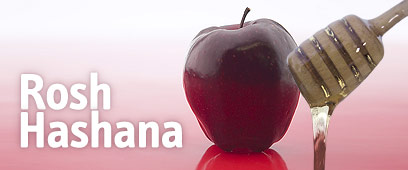
Rosh Hashana – a holiday in transition - Shanah Tovah!
Ynetnews 09.12.07, 08:40 / Israel Jewish Scene
Rosh Hashana – a holiday in transition
Rabbi Davidh Bar-Hayim of Machon Shilo explains how Rosh Hashana, which for centuries has been celebrated for one day only, became a two-day fest after French rabbis forced indigenous Jews to change their practices
Rosh Hashana is currently celebrated throughout the world for two consecutive days, but has this always been the case? According to Rabbi Davidh Bar-Hayim of Machon Shilo, the practice of celebrating the holiday for two days has undergone various fascinating changes throughout history that may still be relevant to Jews today.
For how many days was Rosh Hashana originally celebrated?
Rabbi Bar-Hayim: The Torah speaks of the Festival, known as "Zichron Tru'ah" (Leviticus 23:24) or "Yom Tru'ah" (Numbers 29:1), which falls on the first day of the seventh month (Tishrei) – ie a one-day affair, like all festivals mentioned in the Torah, such as the first and seventh days of Passover, the one day festival of Shavuot, etc.
The Jewish calendar is essentially a lunar calendar (albeit synchronized with the solar year). Seeing that a lunar month is 29.5 days, and seeing that one cannot count half-days, a month must be either 29 or 30 days in length.
The decision to include the 30th day in the preceding month, or to announce that the 30th day was in fact the 1st of the new month, was a major function of the Sanhedrin (the High Court of the Jewish nation in the Land of Israel). As long as this was the case, it could not be known ahead of time which day would in fact become the 1st of the month (Rosh Hodesh).
The court informed the Jewish people of their decision by way of bonfires lit atop mountains or messengers. Communities that were informed well in advance, such as those of Eretz Yisrael, were able to keep the festivals on the appointed day. Communities further afield, however, such as the Jews of Babylon, did not receive word until later in the month; they were thus required to keep two days for every festival day prescribed by the Torah.
Thus in the Land of Israel all festivals were observed for one day. The first day of Passover, for example, was always the 15th of Nissan. In Babylon, however, the first day of the month being unclear, Passover was celebrated on either the 14th and 15th, or the 15th and 16th (this becoming clear only retroactively).
Rosh Hashana was the exception to the rule: it is the only festival which falls on the first of the month. Most Jews, within and without the Land, were required to observe two days, with the exception of the Jews living in relatively close proximity to the seat of the Sanhedrin who could be informed on the day the new month was announced.
So Rosh Hashana was always celebrated for two days even in Israel?
Initially yes, but then things changed with the advent of the fixed calendar in the second half of the 4th century. Doubt was a thing of the past; every Jew now knew the exact date of each festival. For reasons that we shall gloss over here, the Jewish world was henceforth divided into two: in the Land of Israel all festivals, including Rosh Hashana, were celebrated for one day; outside the Land, all festivals were two-day affairs.
This was the reality for over eight centuries. There is neither doubt nor argument regarding this point. Approximately 960 years ago Rav Nissim Gaon wrote to Rav Hai Gaon of Babylon as follows: "Why does our Master claim that the Jews of Eretz Yisrael must celebrate Rosh Hashana for two days? We see to this day that they keep only one day?"
In his response Rav Hai Gaon admits that this was, in fact, the reality, but expresses the opinion that the Jews of Eretz Yisrael are mistaken. It bears noting that this is by no means the only instance of the Torah authorities in Babylon taking a more hard-line and conservative approach than their counterparts in Eretz Yisrael.
The historical fact is that the Jews of Eretz Yisrael – whose practice was based on the opinion of the Torah authorities and the halachic traditions of the Jewish communities in the Land of Israel since the fixed calendar was instituted – took no notice of Rav Hai Gaon.
In Israel today Rosh Hashana is observed for two days. How, why and when did this transition take place?
The status quo remained in place until the 12th century. At that time there was an influx of great rabbis from Provence (the south of France) who simply imposed their halachic views on the indigenous Jewish populace, forcing them to deviate from their ancient traditions and practices. The communities of Eretz Yisrael – by this time small, weak, and lacking strong and courageous Torah leadership – were unable to resist the aggressive takeover.
That, in brief, is why the custom in Israel came to be as it is today.
What was the rationale behind this change?
The argument seems to be based on the following: as mentioned above, prior to the advent of the fixed calendar, most of the Jews in Eretz Yisrael observed two days of Rosh Hashana, with the exception of the Jews living in relatively close proximity to the seat of the Sanhedrin. In other words, within the Land of Israel, two realities existed side by side: those near the court celebrated one day, and those further away celebrated Rosh Hashana for two days.
The essential question, therefore, is this: what should have happened when the fixed calendar was introduced? Should all the Jews of Eretz Yisrael have acted like those who resided near the court, and keep one day, or should they behaved like those further away and kept two?
The historical reality, based on the decision of the rabbis of the Sanhedrin in Eretz Yisrael, was to observe one day only. (Clearly, the Jews of the Land of Israel received this tradition and halachic ruling from earlier generations, ultimately going back to the original Sanhedrin of Hillel the President in the 4th century).
Even if one can make a case for the opposing view, Maimonides teaches us (Shemittah Chap. 10) that when faced with two opinions both of which are tenable, the weight of tradition and the facts on the ground should prevail – and the fact on the ground, for eight centuries, was one day.
How is this relevant today?
The question needs to be asked: are the Jews of Eretz Yisrael today required to continue the present state of affairs, or can we aspire to the authentic and original Judaism of our forefathers who walked these hills and valleys before us?
Another question that might be raised concerns the dynamics of halachic change: should halachah be decided by the kind of strong-arm tactics employed by certain rabbis in the 12th century? Can such power-plays be considered a legitimate mechanism of Torah Judaism?
Some of the greatest medieval Torah authorities, such as Rabbi Zerahyah HaLevi and Rabbenu Ephraim, were unimpressed with the claim that all Jews must observe two days of Rosh Hashana. Both stressed the unchallenged reality in the Land of Israel from time immemorial. Rabbenu Nissim ('Ran') seems to have had similar leanings.
Isn’t observing two days "playing it safe"?
Some may feel that observing two days is preferable, taking the more stringent opinion and "playing it safe". In my view this line of reasoning is mistaken:
* Does it really make sense to observe Rosh Hashana on the 2nd of Tishrei – a day clearly not the "Yom Tru'ah" of the Torah which falls on the first of the month?
* Keeping two days is, in fact, no safer than keeping one: what of praying festive prayers on a weekday? Not wearing tephillin (phylacteries)? Of reciting Kiddush when no Kiddush is called for?
With a fixed calendar in place for over 1,600 years, is it not perhaps time to rethink this issue? I believe, following in Maimonides’ footsteps, that it is possible to reconstitute a Sanhedrin today. The rabbinical establishment chooses to ignore this pressing issue of re-establishing the High Court of Torah Law – is this a case of "can't" or "won't"?
I feel that it is high time that knowledgable and courageous Torah scholars convene to discuss these and related issues.
Rav Davidh Bar-Hayim is the head of Machon Shilo, which seeks to revivify Jewish practice as it was practiced in Eretz Yisrael
Rosh Hashana – a holiday in transition
Rabbi Davidh Bar-Hayim of Machon Shilo explains how Rosh Hashana, which for centuries has been celebrated for one day only, became a two-day fest after French rabbis forced indigenous Jews to change their practices
Rosh Hashana is currently celebrated throughout the world for two consecutive days, but has this always been the case? According to Rabbi Davidh Bar-Hayim of Machon Shilo, the practice of celebrating the holiday for two days has undergone various fascinating changes throughout history that may still be relevant to Jews today.
For how many days was Rosh Hashana originally celebrated?
Rabbi Bar-Hayim: The Torah speaks of the Festival, known as "Zichron Tru'ah" (Leviticus 23:24) or "Yom Tru'ah" (Numbers 29:1), which falls on the first day of the seventh month (Tishrei) – ie a one-day affair, like all festivals mentioned in the Torah, such as the first and seventh days of Passover, the one day festival of Shavuot, etc.
The Jewish calendar is essentially a lunar calendar (albeit synchronized with the solar year). Seeing that a lunar month is 29.5 days, and seeing that one cannot count half-days, a month must be either 29 or 30 days in length.
The decision to include the 30th day in the preceding month, or to announce that the 30th day was in fact the 1st of the new month, was a major function of the Sanhedrin (the High Court of the Jewish nation in the Land of Israel). As long as this was the case, it could not be known ahead of time which day would in fact become the 1st of the month (Rosh Hodesh).
The court informed the Jewish people of their decision by way of bonfires lit atop mountains or messengers. Communities that were informed well in advance, such as those of Eretz Yisrael, were able to keep the festivals on the appointed day. Communities further afield, however, such as the Jews of Babylon, did not receive word until later in the month; they were thus required to keep two days for every festival day prescribed by the Torah.
Thus in the Land of Israel all festivals were observed for one day. The first day of Passover, for example, was always the 15th of Nissan. In Babylon, however, the first day of the month being unclear, Passover was celebrated on either the 14th and 15th, or the 15th and 16th (this becoming clear only retroactively).
Rosh Hashana was the exception to the rule: it is the only festival which falls on the first of the month. Most Jews, within and without the Land, were required to observe two days, with the exception of the Jews living in relatively close proximity to the seat of the Sanhedrin who could be informed on the day the new month was announced.
So Rosh Hashana was always celebrated for two days even in Israel?
Initially yes, but then things changed with the advent of the fixed calendar in the second half of the 4th century. Doubt was a thing of the past; every Jew now knew the exact date of each festival. For reasons that we shall gloss over here, the Jewish world was henceforth divided into two: in the Land of Israel all festivals, including Rosh Hashana, were celebrated for one day; outside the Land, all festivals were two-day affairs.
This was the reality for over eight centuries. There is neither doubt nor argument regarding this point. Approximately 960 years ago Rav Nissim Gaon wrote to Rav Hai Gaon of Babylon as follows: "Why does our Master claim that the Jews of Eretz Yisrael must celebrate Rosh Hashana for two days? We see to this day that they keep only one day?"
In his response Rav Hai Gaon admits that this was, in fact, the reality, but expresses the opinion that the Jews of Eretz Yisrael are mistaken. It bears noting that this is by no means the only instance of the Torah authorities in Babylon taking a more hard-line and conservative approach than their counterparts in Eretz Yisrael.
The historical fact is that the Jews of Eretz Yisrael – whose practice was based on the opinion of the Torah authorities and the halachic traditions of the Jewish communities in the Land of Israel since the fixed calendar was instituted – took no notice of Rav Hai Gaon.
In Israel today Rosh Hashana is observed for two days. How, why and when did this transition take place?
The status quo remained in place until the 12th century. At that time there was an influx of great rabbis from Provence (the south of France) who simply imposed their halachic views on the indigenous Jewish populace, forcing them to deviate from their ancient traditions and practices. The communities of Eretz Yisrael – by this time small, weak, and lacking strong and courageous Torah leadership – were unable to resist the aggressive takeover.
That, in brief, is why the custom in Israel came to be as it is today.
What was the rationale behind this change?
The argument seems to be based on the following: as mentioned above, prior to the advent of the fixed calendar, most of the Jews in Eretz Yisrael observed two days of Rosh Hashana, with the exception of the Jews living in relatively close proximity to the seat of the Sanhedrin. In other words, within the Land of Israel, two realities existed side by side: those near the court celebrated one day, and those further away celebrated Rosh Hashana for two days.
The essential question, therefore, is this: what should have happened when the fixed calendar was introduced? Should all the Jews of Eretz Yisrael have acted like those who resided near the court, and keep one day, or should they behaved like those further away and kept two?
The historical reality, based on the decision of the rabbis of the Sanhedrin in Eretz Yisrael, was to observe one day only. (Clearly, the Jews of the Land of Israel received this tradition and halachic ruling from earlier generations, ultimately going back to the original Sanhedrin of Hillel the President in the 4th century).
Even if one can make a case for the opposing view, Maimonides teaches us (Shemittah Chap. 10) that when faced with two opinions both of which are tenable, the weight of tradition and the facts on the ground should prevail – and the fact on the ground, for eight centuries, was one day.
How is this relevant today?
The question needs to be asked: are the Jews of Eretz Yisrael today required to continue the present state of affairs, or can we aspire to the authentic and original Judaism of our forefathers who walked these hills and valleys before us?
Another question that might be raised concerns the dynamics of halachic change: should halachah be decided by the kind of strong-arm tactics employed by certain rabbis in the 12th century? Can such power-plays be considered a legitimate mechanism of Torah Judaism?
Some of the greatest medieval Torah authorities, such as Rabbi Zerahyah HaLevi and Rabbenu Ephraim, were unimpressed with the claim that all Jews must observe two days of Rosh Hashana. Both stressed the unchallenged reality in the Land of Israel from time immemorial. Rabbenu Nissim ('Ran') seems to have had similar leanings.
Isn’t observing two days "playing it safe"?
Some may feel that observing two days is preferable, taking the more stringent opinion and "playing it safe". In my view this line of reasoning is mistaken:
* Does it really make sense to observe Rosh Hashana on the 2nd of Tishrei – a day clearly not the "Yom Tru'ah" of the Torah which falls on the first of the month?
* Keeping two days is, in fact, no safer than keeping one: what of praying festive prayers on a weekday? Not wearing tephillin (phylacteries)? Of reciting Kiddush when no Kiddush is called for?
With a fixed calendar in place for over 1,600 years, is it not perhaps time to rethink this issue? I believe, following in Maimonides’ footsteps, that it is possible to reconstitute a Sanhedrin today. The rabbinical establishment chooses to ignore this pressing issue of re-establishing the High Court of Torah Law – is this a case of "can't" or "won't"?
I feel that it is high time that knowledgable and courageous Torah scholars convene to discuss these and related issues.
Rav Davidh Bar-Hayim is the head of Machon Shilo, which seeks to revivify Jewish practice as it was practiced in Eretz Yisrael
Wednesday, August 29, 2007
Israel, Hamas came close to Shalit deal
JTA, 8-29-07
Israel and Hamas came close to clinching a deal in May for the release of Gilad Shalit from his Gazan captivity.
Israeli Vice Premier Haim Ramon on Wednesday confirmed recent disclosures by Hamas that Egyptian-brokered talks on freeing Shalit in exchange for Palestinian prisoners almost bore fruit three months ago.
Speaking on Israel Radio, Ramon said the Olmert government had agreed in principle to release 450 prisoners, but balked at some of the names on the roster presented by Hamas. Israel has long ruled out an exchange in which deadly terrorists would be freed from jail.
Ramon said Israel is awaiting a new list of 1,000 names to be submitted by Hamas, whose gunmen led a June 25, 2006 cross-border raid in which Shalit was captured and two other soldiers killed.
Israel and Hamas came close to clinching a deal in May for the release of Gilad Shalit from his Gazan captivity.
Israeli Vice Premier Haim Ramon on Wednesday confirmed recent disclosures by Hamas that Egyptian-brokered talks on freeing Shalit in exchange for Palestinian prisoners almost bore fruit three months ago.
Speaking on Israel Radio, Ramon said the Olmert government had agreed in principle to release 450 prisoners, but balked at some of the names on the roster presented by Hamas. Israel has long ruled out an exchange in which deadly terrorists would be freed from jail.
Ramon said Israel is awaiting a new list of 1,000 names to be submitted by Hamas, whose gunmen led a June 25, 2006 cross-border raid in which Shalit was captured and two other soldiers killed.
Subscribe to:
Posts (Atom)